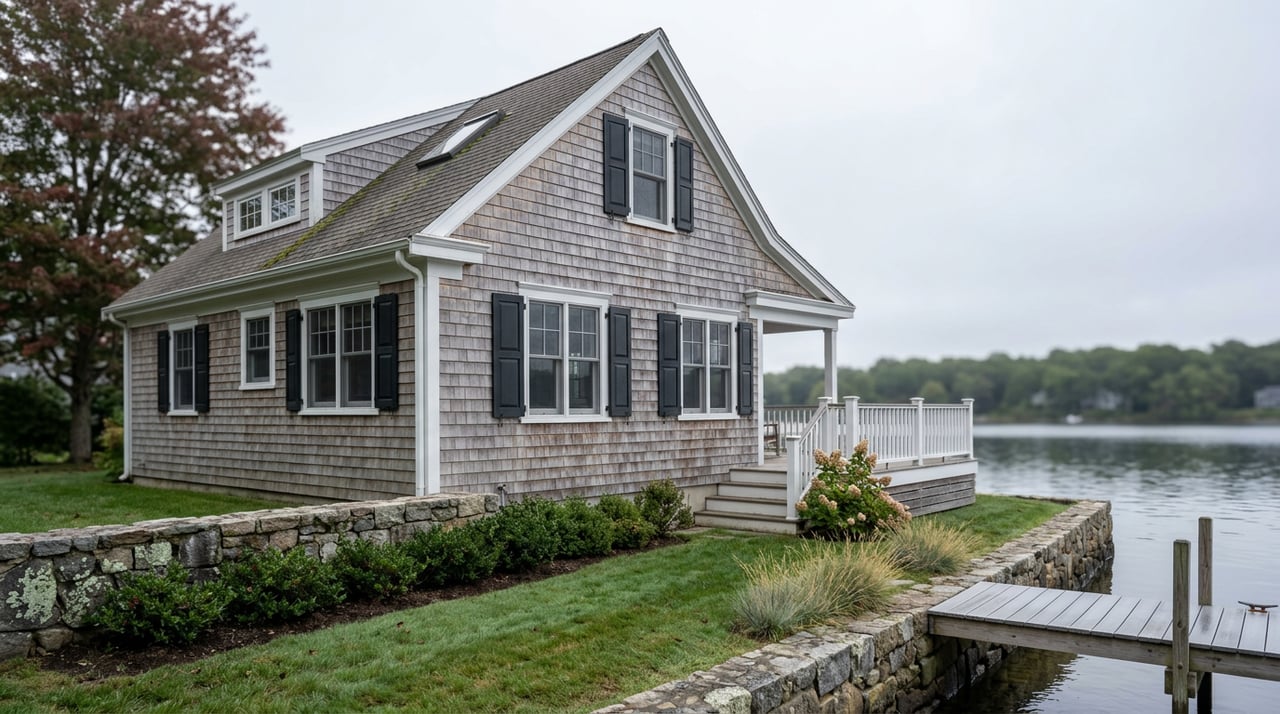
In August 2025, an Alton property owner named Dooley asked the town's Conservation Commission for something that sounded simple: widen a cottage deck on Sleeper Island to 11 feet and add an 8-by-16-foot deck on the south side. The commission's own minutes show what happened next. The proposed deck ran straight into the town's 30-foot waterfront setback under Section 327.A.1 of Alton's zoning ordinance, a rule that exists on top of New Hampshire's statewide shoreland law. A deck addition most homeowners would consider routine turned into a permit review.
That case is a small, specific window into something buyers shopping Alton's waterfront rarely think through before they write an offer. The cheapest way into Lake Winnipesaukee ownership in this town is usually the camp with the least room to grow, not because of taste or condition, but because of where it sits relative to the water.
The Buffer Doesn't Care What You Paid
New Hampshire's Shoreland Water Quality Protection Act, RSA 483-B, creates a protected shoreland extending 250 feet back from the water's edge on lakes over 10 acres, which covers all of Winnipesaukee. Every property inside that line answers to the same state rules regardless of price. But the rules bind differently depending on how the lot was built out decades ago, and that's where the sticker price starts to matter.
Older camps built close to the water, the kind that show up at the lower end of Alton's listings, are far more likely to sit inside the tightest part of that protected zone. Newer or larger waterfront homes were more often built with the current buffer already in mind. So the affordability gap between a modest Alton camp and a newer waterfront build isn't just about square footage. It's also about how much of the lot is even legally available to expand into.
Three Zones, Each Stricter Than the Last
The protected shoreland isn't one uniform rule. It steps down in three bands as you get closer to the water:
| Zone | Distance from reference line | What it restricts |
|---|---|---|
| Protected shoreland | 0–250 feet | Permit required for most construction, excavation, or fill |
| Woodland buffer | 0–150 feet | At least 25 percent of the area between 50 and 150 feet must stay unaltered |
| Waterfront buffer | 0–50 feet | Tree removal follows a point-based grid system, and primary structures must sit at least 50 feet back under the state minimum |
Towns are allowed to set stricter local rules on top of the state floor, never looser ones. Alton's own ordinance does exactly that for certain structures, which is why a deck addition on Sleeper Island answered to a 30-foot town setback in the same review where the state's broader shoreland tiers also applied.
What "Legally Nonconforming" Actually Allows
Most older camps in the 50-foot waterfront buffer are what the state calls legally nonconforming. They were built before today's setbacks existed, so they're allowed to stand, get repaired, and even be replaced in kind. What they can't do is grow toward the water. Any expansion has to move the structure to be more nearly conforming, not less. A water-facing porch or deck can't simply be enclosed into new heated living space without a shoreland permit and a separate redevelopment waiver.
Vertical growth is treated a little differently. Adding a dormer or changing a roofline without touching the footprint is one of the project types state guidance recognizes as a path forward, but it still requires the same permit and waiver process, not an automatic pass. The Dooley file shows how quickly a small horizontal addition, even one that seems minor from a homeowner's chair, can collide with a setback line drawn decades before the buyer showed up.
The Basin Road Project Shows the Other Way Through
The same Conservation Commission meeting reviewed a very different kind of project a few miles away. On Basin Road, an applicant proposed replacing an existing nonconforming residence entirely, moving the new structure further from the shoreline than the old one. The plan reduced the driveway footprint, added pervious walkways and a pervious patio instead of standard paving, installed a new septic system, reconstructed stone walls, and added drip line trenches for stormwater control. The commission reviewed it and raised no objections.
That's the compliant version of solving the same problem the Sleeper Island deck ran into. Instead of adding onto a structure sitting close to the water, the Basin Road plan pulled the whole footprint back and swapped hard surfaces for permeable ones. It's a more expensive route, and a slower one, but it's the one that gets through review without a variance fight.
What the Price Tag Doesn't Tell You
Here's where the market data changes how this should read for a buyer. In the first half of 2025, the lowest-priced single-family waterfront sale anywhere on Lake Winnipesaukee closed at $650,000, on Sleeper Island in Alton, a fraction of that same period's $2.19 million median waterfront sale price. That gap between the entry point and the rest of the market hasn't closed. As of June 29, 2026, active Winnipesaukee waterfront listings across the region carried a median asking price of about $2.5 million, still leaving a wide space between what a modest older camp can sell for and what most of the lake's waterfront inventory is priced to command.
A price that far below the surrounding market on a lake this competitive isn't simply a deal. It's frequently a signal about the lot itself, an older camp, tight to the shoreline, sitting inside the buffer where the expansion options are the most limited. Alton's own overall median list price across active listings sat near $689,000 as of late July 2026, well under the lake-wide waterfront median, and separate reporting on Alton specifically showed listings taking a median of 38 days to sell as of June 2026.
That slower pace matters for a different reason too. Winnipesaukee waterfront single-family sales carried a median of 72 days on market from January through April 2026, up from 65 days over the same stretch in 2025, an increase of roughly 11 percent. A market moving a little slower gives buyers something they didn't have two years ago: time to actually check a property's shoreland history, its existing impervious coverage, and whether its dock and any past additions were permitted, before they're competing in a bidding war that forces a decision in 48 hours.
Before You Write the Offer
A few checks are worth doing before you fall in love with an Alton camp's price tag:
- Ask the seller's agent whether the town or NHDES has any shoreland permit history on file for the property, including for the dock.
- Find out how close the existing structure sits to the 50-foot waterfront buffer. A camp built right up against it has almost no room to add square footage without a full teardown-and-rebuild.
- Get a sense of current impervious surface coverage on the lot. Roofs, decks, and driveways all count, and small lots can hit the 20 to 30 percent threshold faster than buyers expect.
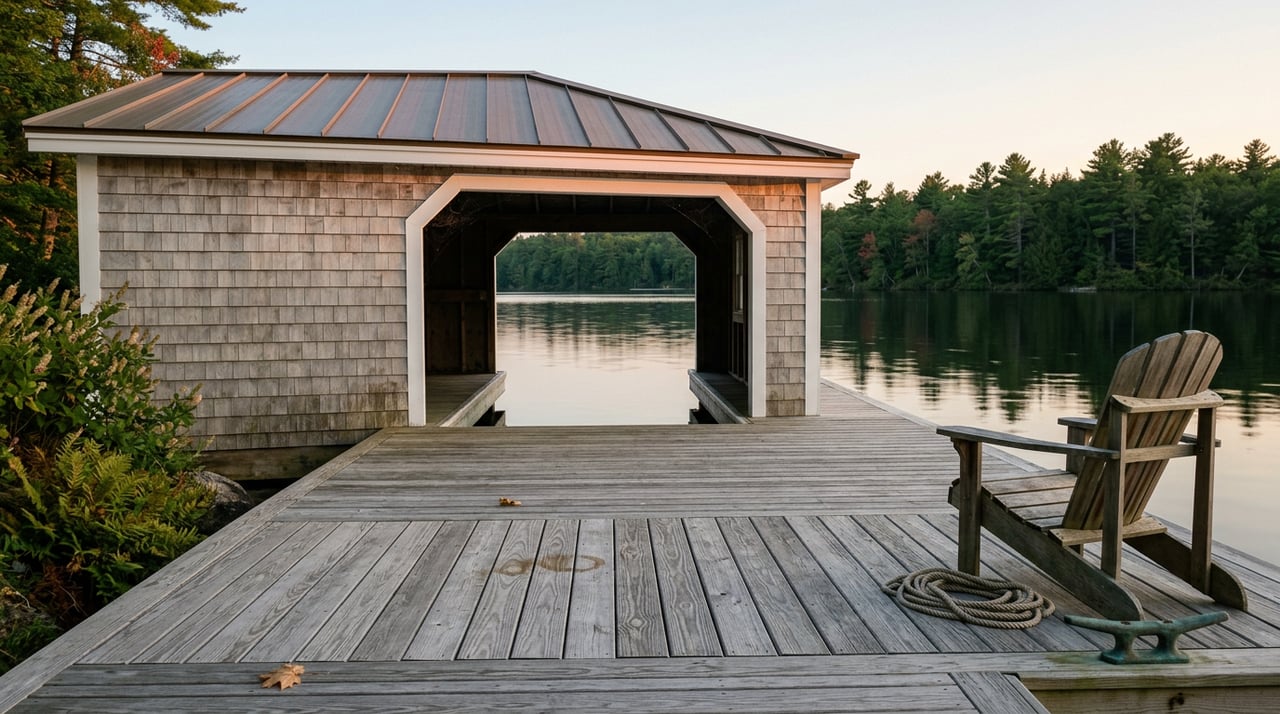
- Confirm whether an existing dock, boat lift, or beach area was ever permitted. Even like-for-like replacement of a dock requires a state wetlands permit.
- If the plan involves any addition, budget for both the shoreland permit and the separate redevelopment waiver that expanding a nonconforming structure typically requires, and build the review timeline into your renovation schedule, not just the closing date.
A Few Questions Worth Asking Directly
Can I add a bedroom above an existing camp without changing its footprint? Sometimes, but not automatically. Vertical changes like adding a dormer are recognized as a distinct project type under state guidance, and they still require a shoreland permit and a redevelopment waiver before work begins.
If a dock is already there, can I assume I can replace it the same way? Not without checking first. Even changes to an existing dock require a permit from the state's wetlands program, and permanent pile-driven docks are only allowed on lakes large enough that seasonal docks can't handle wind and wave conditions, which is a narrower category than most buyers assume.
Does every town on the lake apply the same setback? The state's 250-foot protected shoreland and 50-foot buffer apply everywhere on Winnipesaukee, but individual towns can add stricter local rules. Alton's own 30-foot waterfront setback for certain structures is one example, and it's worth checking a target town's own zoning ordinance rather than assuming the state minimum is the whole story.
None of this means an Alton camp is a bad buy. It means the number on the listing sheet is only half the story, and the other half lives in town records and state permit files that most buyers never open until after they've signed. If you're weighing a waterfront camp anywhere between Alton Bay and the rest of the Lakes Region and want a straight read on what a specific lot's shoreland history actually allows, reach out to HomesByAnaRealtor. Get your instant home valuation and let's talk through what the property in front of you can really become.